ATTENTION: If You’ve Tried Everything and Still Feel Broken
You Were Never Broken. Your OCD Is a Part of You Trying to Protect You.
After everything you’ve tried, this is the piece no one ever explained — and why it’s not too late.
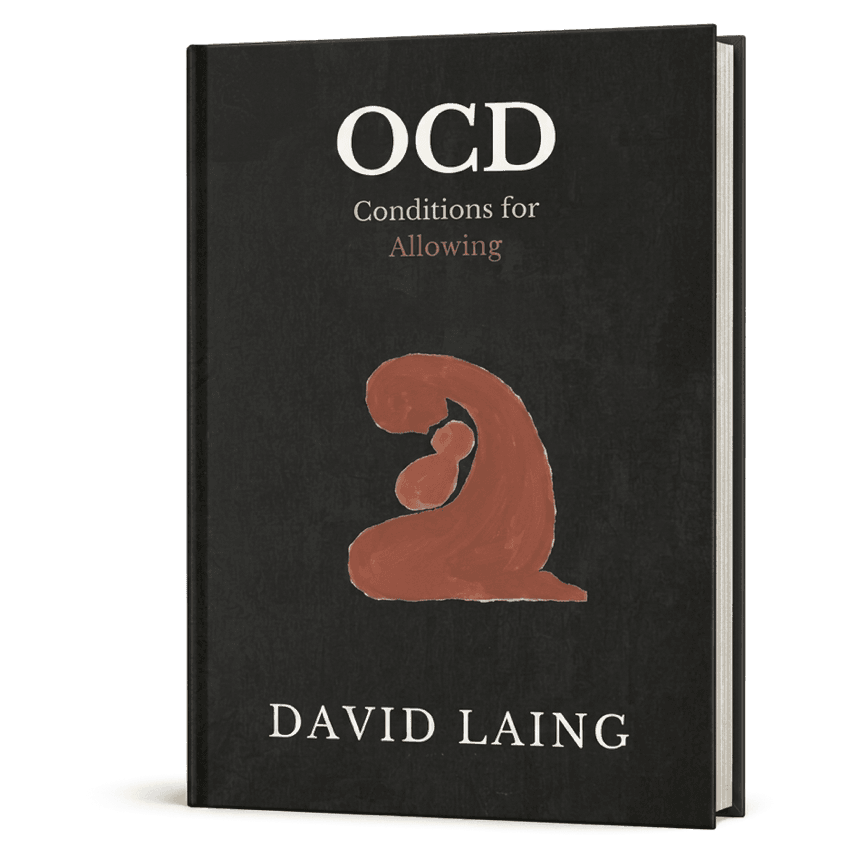
David Laing’s IFS-informed approach works with the parts beneath OCD — and the one move that frees them, the book calls allowing.
Instant digital access — just £4.99
“Best month in perhaps 30 years — in less than one month since reading.”
— KF, United Kingdom
Sound familiar?
You’ve done the work. Therapy. Medication. Maybe ERP.
And it helped — to a point.
You can hold down a job. You can get through the day. On the outside, you look fine.
But every morning, you get about ten seconds of peace before it hits. And then it’s: here we go again. What’s today going to bring?
There’s no off switch. Every second is taken up — ruminating, checking, avoiding, reassuring yourself. It’s like something is draining your mental energy from the inside.
The best anyone has offered you is “learning to live with it.”
You’ve done everything “right.” So why hasn’t it stopped?
Because the problem was never what you thought it was. And the solution you were given was never designed to fix it.
Underneath all of it is a single move — one nothing you’ve tried has touched. Not managing the loop. Ending it. It’s called allowing, and everything that follows is how you get there.
The Discovery That Changed Everything
You’ve been told OCD is a brain disorder. A chemical imbalance. Something to manage for life. What if that’s the lie that’s kept you stuck?
ERP taught you to resist the compulsions. Medication took the edge off. Therapy helped you cope. None of it was wrong — it was just incomplete. It treats the alarm, not the fire.
And none of it ever explained why this exact thing triggers you. Why certain thoughts hit so hard. Why you can do everything right and still feel trapped.
Here’s what’s actually going on. And it starts with something you already know, even if you’ve never put it this way: you’re not one mind in there — you’re a system of parts.
One part of you wants to check; another knows it’s pointless and begs you to stop. One part is exhausted; another won’t let up. That’s not a flaw — it’s how every mind works. OCD is what happens to a couple of those parts when something once hurt too much to feel.
The wound, and the part that guards it.
When you were young, something happened you couldn’t make sense of and couldn’t feel all the way through. So a part of you turned away from it — walled it off, so you’d never have to feel it again.
The pain that got walled off — frozen exactly as it was, at the age it happened — is a young part of you still holding it. In IFS, the model this book is built on, that part is the Exile. And the turning-away itself — the part of you whose whole job is to keep you from ever feeling that pain — is the Protector. It isn’t separate from the wound; it exists for it.
In OCD, the way it keeps you at a distance is the compulsion: check, ruminate, wash, reassure. Every compulsion is the Protector doing its one job — holding you away from a pain it decided you couldn’t survive. It was never the enemy. It’s been protecting you this whole time.
Here’s the trap. Every time life gets near that walled-off pain, it stirs — and the Protector fires to pull you away. The compulsion brings a few seconds of relief, and the relief tells your body the danger was real and the ritual handled it — so the pain stays sealed, and next time it stirs, the Protector fires again. That’s the loop you’ve been stuck in. It doesn’t heal the wound; it holds it shut.
And OCD is never just one of these. It takes two — two wounded parts, from two different moments, running together.
The shame
A young part carrying I’m bad / I’m not enough / I’m unworthy. Felt as shame — often with no single place you can put your finger on.
The fright
A fright your body braced against and never let go of, running one message ever since: if I don’t stay in control, I’m not safe. You can feel this one — a grip in the throat, a knot in the stomach.
Checking, contamination, harm, relationships — the surface looks different every time. Underneath, it’s these same two, guarded the same way.
You don’t have to undo both. Reach either one, and the whole thing comes apart.
The Self — the you that was never touched.
Here’s what no one told you. Underneath the Exile, underneath the Protector, there’s a you that was never wounded and never broke. IFS calls it the Self — and it isn’t a part. It’s you at your core: calm, clear, compassionate, steady, curious about your own life.
Those qualities aren’t something you build — they’re simply what’s there when no part is running the show. And the Self is the one thing that can turn back to that frozen part and finally give it what it never got.
That’s where recovery actually happens. Not by fighting the compulsion — but by turning toward the very thing it’s been guarding you from, and meeting it. That turning-toward is allowing — the move you heard named back at the start, and the whole of this book is how you learn to make it possible. This book shows you how.
What complete recovery actually looks like
You’ve been told management is the goal. It isn’t.
Most treatments aim at remission — you white-knuckle the compulsions, the symptoms come down, and you hold the line until life gets heavy and it all comes back.
Complete recovery is different. And it comes down to one move.
The move: your Self meets the wounded part.
Recovery is the Self — the you underneath, the one that was never wounded — turning back toward the frozen part and staying with it. You don’t fight the feeling or fix it. You just stay.
And as the Protector steps aside and you’re really there, something arrives on its own: warmth. Not warmth you summon — the warmth that’s simply there in you once nothing’s in the way. It’s the exact thing that was missing the first time. The book calls it allowing.
And for the part, that warmth is the one thing it never had: someone there. The worst of that moment was never just the fear — it was being alone in it, with no one to turn to. That’s what froze, and what’s stayed frozen ever since. So what heals it isn’t the fear finally going away — it’s no longer being alone with it.
The you that was never wounded, here now, staying. Met like that, what’s been frozen starts to move. Sometimes that’s tears. Sometimes the body softens, or shakes. Something stuck for years finally lets go.
Why it’s the hardest simple thing — and what the book is named for.
If it were as easy as “just feel your feelings,” you’d have done it already. The move is simple. It’s also the hardest thing in the world — because the instant the feeling rises, the Protector does its job and yanks you up into your head, to check, to plan, to figure it out. You can’t force your way past that. You have to build the conditions that let you stay. That’s the work — and it’s what this book is named for: the conditions for allowing.
What happens when one heals.
You have two of these wounded parts. Heal either one — meet the shame the young part carries, or the brace your body’s been holding — and the whole thing comes apart.
And here’s what most people never hear: the parts don’t get deleted. They get freed. The Exile, finally met, puts down the pain it’s carried all these years. And the Protector — relieved of a job it never wanted — doesn’t vanish; it changes. The part that spent years checking and bracing comes back in a new role: care instead of compulsion, steadiness instead of control. You stop being it, and start leading it.
The symptom was never the thought.
Recovered minds get intrusive thoughts too — everyone does. In OCD, the wounds underneath seize an ordinary thought and charge it into an emergency, and the Protector fires. That is the symptom — the cycle, not the thought. Meet that wound — really meet it — and it has no charge left to lend. The thought still comes; it just finds nothing to catch on.
And the Protector — now an ally, not an alarm — is still the first to notice it, but sees in an instant what it is: not a threat, not you, nothing to act on. The same vigilance that once ran the compulsion, turned to discernment. The urge can still flicker — you clock it, and let it pass. No emergency. No compulsion. No cycle.
That’s the destination this book is built around.
Not managing the alarm. Not coping better. Actually recovered.
See, I Was Just Like You…
I spent fifteen years with OCD. Six hours a day of compulsions at my worst.
I did therapy. I did ERP. I took medication. I managed.
Then one day in a barbershop, I couldn’t stop. The compulsions were so loud I walked out mid-haircut, sat in my car, and broke down.
But sitting in that car, something else happened. I knew — in my soul — that it was possible to be free from this. And I knew I owed it to myself to do whatever was necessary to find out how.
That was the day I asked the question that changed everything:
“What would I have to believe about myself to feel this desperate need?”
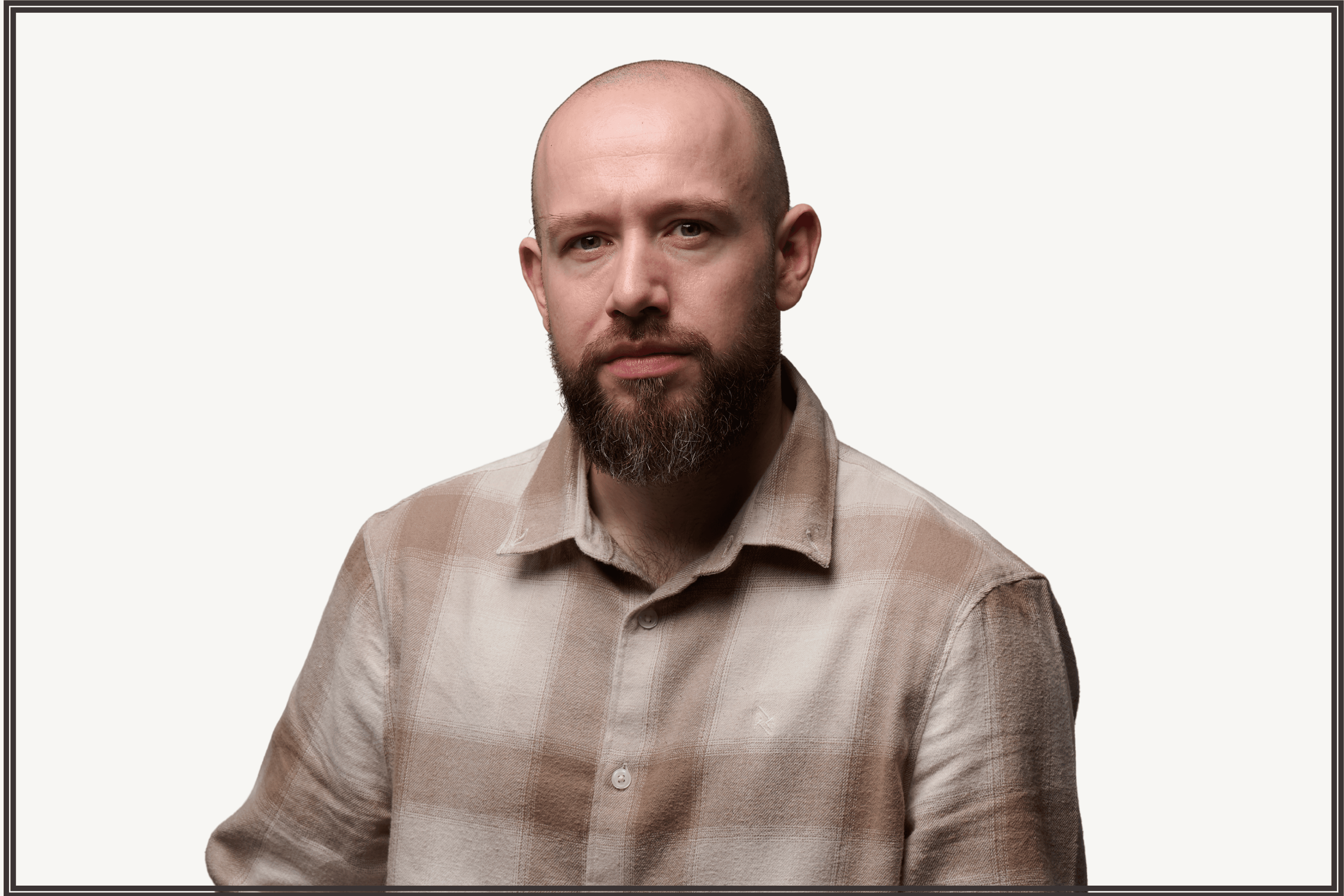
The answer cracked my OCD wide open. I recovered completely. Not managed. Not coped with. Recovered.
What finally worked was seeing what no one had shown me: my OCD wasn’t a broken brain. It was wounded parts my mind had been protecting — and meeting them, instead of fighting the compulsions, was what let it all go.
From that, I built a step-by-step framework for complete recovery. Now I guide clients through the same process — tracking results with the clinical measures used in OCD research. Most feel a real shift within the first few months.
I wrote this book to put that whole process in your hands.
Specialist OCD Recovery Coach · Evidence-informed practice · Y-BOCS tracked outcomes
Introducing a New Approach to Recovery
OCD: Conditions for Allowing lays out a different way through OCD — one that challenges almost everything you’ve been told about recovery.
David Laing walks you underneath the thoughts to the wounded parts actually driving them, shows you the one move that heals them, and how to build the conditions that make that move possible.
This is not another coping strategy. It’s a roadmap to freedom.
238-page eBook (PDF & EPUB)
Free community access
Premium Recovery Portal access
Just £4.99 — less than a coffee
Instant digital access — just £4.99
What You’ll Discover Inside
Why You're Still Stuck After All These Years
Every compulsion brings a hit of relief — and quietly tells your body the danger was real, so it comes back harder. That's the loop. Until you reach what's underneath it, nothing you try can touch the cause.
The Two Wounded Parts Underneath Every Theme
Checking, contamination, harm, relationships all trace to the same two parts: a young one carrying I'm bad / not enough / unworthy (felt as shame), and one that braced against a fright and never let go (if I don't stay in control, I'm not safe). Heal either one and the whole thing comes apart.
The Part of You That's Trying to Protect You
That desperate urge to check, ruminate, or seek reassurance isn't broken wiring. It's a Protector — a part doing the only job it knows: keeping you away from a pain it can't let you feel. See it that way, and your whole relationship to the compulsion changes.
The One Move That Heals It
Why feelings only change when you stop trying to change them — and the single move (allowing) where the part of you that was never wounded finally turns toward the part that was. Plus why it's the hardest simple thing you'll ever do, and how to make it possible.
Recovery Is Subtraction, Not Addition
You're not building a better you. You're freeing what froze in childhood — the life and aliveness that got locked away with the pain. What comes back isn't a new you. It's the one that was always there underneath.
Real people. Real change.
5-star Trustpilot reviews of the book — and results from David’s recovery clients.
After 22 years, his wife asked: “Are you 100% better?”
“Twenty-two years scanning for threats every morning. Three weeks in, my wife noticed — she even asked, ‘Are you 100% better?’ Then my dad, who never talks about feelings, said: ‘You’re feeling a lot better, aren’t you?’”
Mark
Contamination OCD, 22 years · US
Best month in 30 years
“I no longer believe rumination is intractable. My best month in perhaps 30 years — in less than one month since reading the book.”
KF
United Kingdom · Trustpilot
From “untreatable” to his best week in years
“I felt untreatable — scared to even start in case it failed. A few weeks later, it was one of the best weeks I’d had at work and in general in a long time.”
Marcus
Harm OCD, 28 years · UK
OCD is History
“Three years of psychotherapy were NEVER helpful with my OCD. This book gave me what I really needed — understanding and hope my life could change. OCD is History!!!”
Maria Bennett
United States · Trustpilot
Thirty years suppressed — now it makes sense
“I suppressed this for thirty years. A month in, I understand it instead of blocking it out. It all makes sense now, more than it ever has.”
Maureen
Somatic OCD, 30 years · NI
Off the medication, fear cut from 8 to 3
“I’ve been on psychiatric medication since I was four — now I’m off the benzodiazepines. My fear’s gone from 8 out of 10 to 3, and I can sit with things without spiralling.”
Daniel
Religious OCD · US
The path to complete recovery
“Shows the path to complete recovery so incredibly well. I’d never understood why professionals call it a ‘lifelong’ condition. A very special read.”
Anita Ferraz
Brazil · Trustpilot
Recovery-client testimonials are from David’s Implementation Programme; names changed and details lightly generalised for privacy. Book reviews are verified on Trustpilot.
Is This For You?
This book is for you if:
- You've tried therapy, ERP, or medication — and you're still stuck
- You understand your OCD but can't stop the compulsions
- You're tired of being told to "sit with it" without ever being told why
- You sense there's something underneath nobody's reached
- You want complete recovery, not management
This book is NOT for you if:
- You want a quick fix or a magic pill
- You're not willing to look underneath the symptoms
- You want someone to do it for you
Every Day Inside the Loop Is Another Day Lost
The loop doesn’t pause. Every compulsion you do today wears the groove a little deeper for tomorrow. It won’t wait for you to feel ready.
But here’s what readers tell us: the shift starts the moment it finally makes sense — not weeks later, not when you finish the book. The moment you see what’s really been running, it starts to loosen its grip.
You can keep doing what’s kept you stuck. Or you can start reading today and see it for what it is.
Frequently Asked Questions
ERP teaches you to resist compulsions. This book shows you why you have them — the wounded parts underneath, driving the whole loop. Meet those, instead of fighting the compulsion, and it loses its grip. This isn't a replacement for therapy — it's the piece most therapy doesn't cover.
You’ve Carried This Long Enough
For years you’ve been told the best you can hope for is to manage it. That’s the lie. Underneath the thoughts are two wounded parts your mind has been protecting — and they can be met, healed, and set down. That isn’t coping. It’s complete recovery.
You can keep doing what’s kept you stuck. Or you can start today. Not managed. Not coped. Recovered.
238-page eBook (PDF & EPUB)
Free community membership
Online portal with guided recovery exercises
Just £4.99 — less than a coffee
If the framework doesn’t shift your understanding of OCD, email me directly and I’ll make it right.